
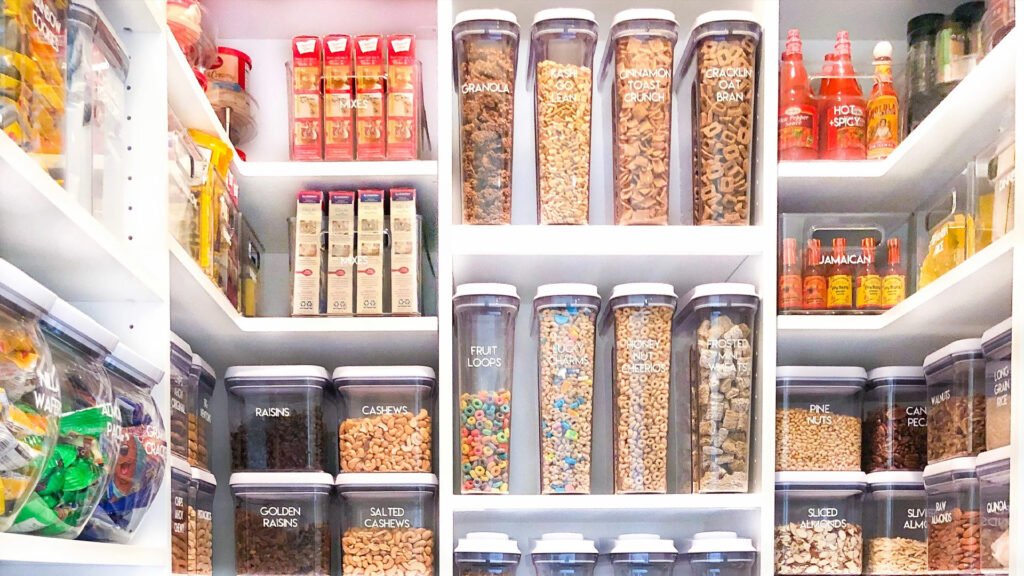
1. Start Small and Gradually Build Your Stockpile
- Begin by storing non-perishable items you already consume regularly. Focus on basics like rice, pasta, canned vegetables, and beans.
- Gradually expand your stockpile to include other essentials like flour, sugar, and cooking oil.
2. Understand Shelf Life
- Different foods have varying shelf lives. Familiarize yourself with expiration dates and best-by labels.
- Rotate your stock by using older items first and replacing them with fresh ones.
3. Choose the Right Containers
- Opt for airtight containers to prevent moisture, pests, and oxygen from degrading your food.
- Glass jars, food-grade plastic bins, and mylar bags are excellent choices.
4. Keep It Cool and Dry
- Store your food in a cool, dry place away from direct sunlight.
- Basements, pantries, and dedicated storage rooms work well.
5. Categorize Your Stockpile
- Group similar items together (e.g., grains, canned goods, spices).
- Label containers to easily identify their contents.
6. Learn Basic Food Preservation Techniques
- Explore canning, dehydrating, and vacuum sealing.
- These methods extend shelf life and allow you to store seasonal produce.
7. Include Ready-to-Eat Meals
- Have a supply of ready-to-eat foods like canned soups, granola bars, and dried fruits.
- These come in handy during emergencies or when you need a quick meal.
8. Rotate Your Stockpile
- Regularly check expiration dates and use older items first.
- Create a system to ensure proper rotation.
9. Stock Up on Spices and Flavor Enhancers
- Spices, salt, and bouillon cubes can transform basic ingredients into flavorful meals.
- They’re compact and have long shelf lives.
10. Educate Your Family
- Teach everyone in your household about food storage practices.
- Make sure they know where the emergency supplies are located.
Remember, building a food storage pantry is an ongoing process. Start with what you have, learn as you go, and adapt to your family’s needs. Happy food storage planning!